# NAD+ 2500 mg Kit: Exploring the Role of Nicotinamide Adenine Dinucleotide in Scientific Research
Nicotinamide adenine dinucleotide (NAD+) is one of the most extensively studied coenzymes in cellular biology. Present in virtually every living cell, it participates in hundreds of metabolic reactions that support energy production, DNA maintenance, and cellular communication. Research products such as the NAD+ 2500 mg Kit provide laboratories with a concentrated supply of this important molecule for experimental investigations.
**Understanding NAD+**
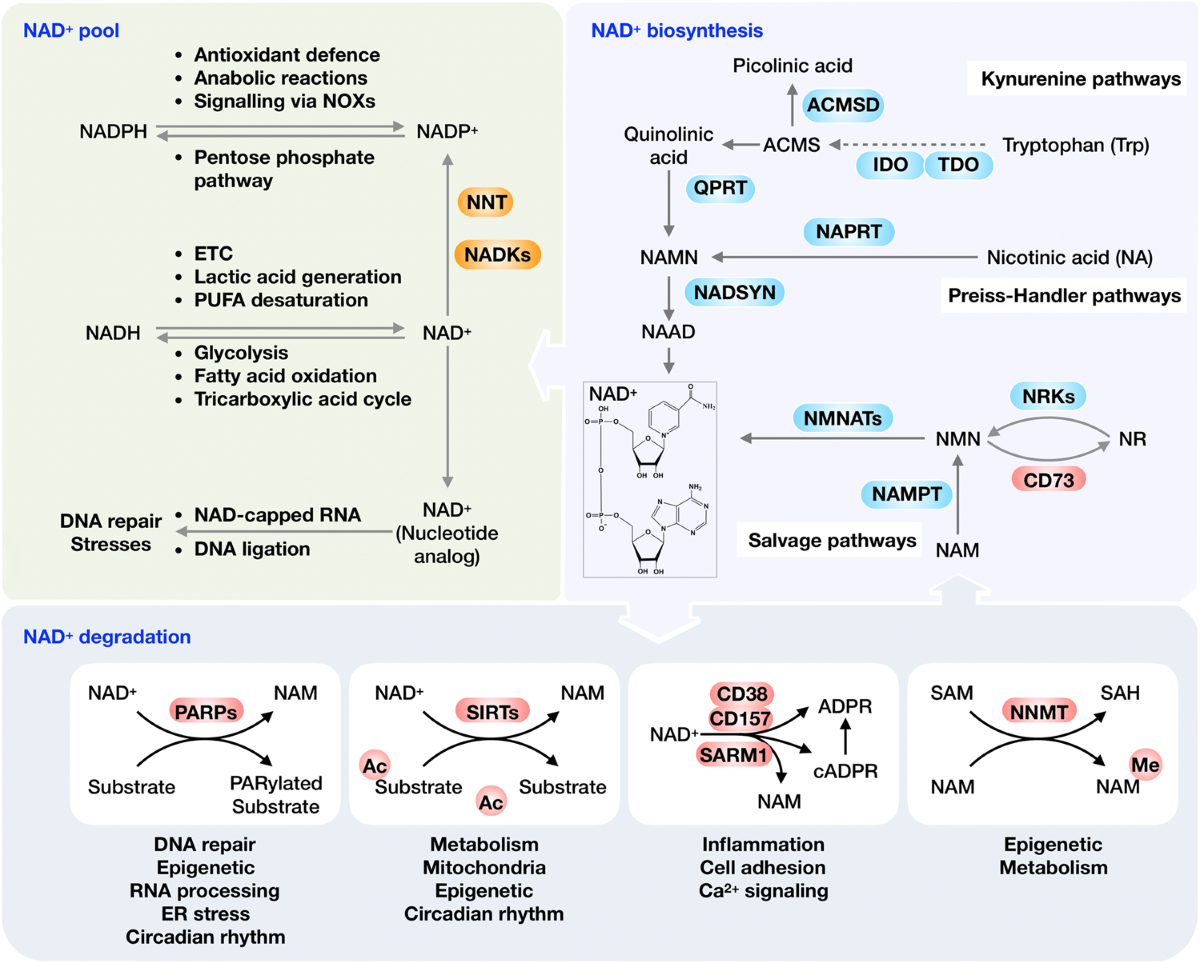
NAD+ is a naturally occurring coenzyme that serves as a critical component of numerous biochemical pathways. It functions as an electron carrier during cellular respiration, allowing cells to convert nutrients into usable energy in the form of ATP. Because of this central role, NAD+ has become a major focus in studies involving metabolism, mitochondrial function, and cellular health.
Scientists have also discovered that NAD+ participates in signaling pathways that regulate cellular maintenance and adaptation to physiological stress, making it an important subject in modern biomedical research.
**Why NAD+ Is Important in Research**
Interest in NAD+ has expanded significantly as researchers continue to investigate how changing intracellular NAD+ levels influence biological processes. Laboratory studies often explore its relationship with:
* Cellular energy metabolism
* Mitochondrial performance
* DNA repair mechanisms
* Oxidative stress responses
* Healthy aging pathways
* Cellular communication and signaling
These research areas continue to generate valuable information about how cells maintain normal physiological function under varying conditions.
**Features of a 2500 mg Research Kit**
The NAD+ 2500 mg Kit is designed to provide a substantial quantity of research material for laboratories conducting multiple experiments or long-term projects. The kit format typically consists of several individually packaged vials, allowing researchers to prepare only the amount needed for specific protocols while preserving the remaining material under appropriate storage conditions.
This format may improve workflow efficiency and help maintain consistency throughout extended research studies.
**Applications Across Scientific Disciplines**
Because NAD+ participates in so many cellular functions, it has become relevant to a wide range of research fields. Investigators frequently examine its potential involvement in:
* Molecular biology
* Biochemistry
* Cellular physiology
* Neuroscience
* Metabolic research
* Mitochondrial biology
* Studies of cellular resilience
Its versatility makes NAD+ one of the most widely investigated metabolic cofactors in laboratory science.
**Quality and Manufacturing Standards**
Research-grade NAD+ products are generally manufactured under controlled production conditions designed to promote consistency and purity. Careful quality control helps verify product identity and batch uniformity, both of which are important for obtaining reproducible experimental results.
Some manufacturers also incorporate authentication systems that allow researchers to verify product authenticity before laboratory use.
**Proper Storage and Laboratory Handling**
As with many biologically active compounds, appropriate storage conditions are important for maintaining stability. Research facilities typically keep NAD+ products in refrigerated environments and protect them from excessive heat, moisture, and direct light until preparation. Proper handling procedures help preserve the integrity of the compound during experimental work.
Accurate documentation of preparation methods and storage conditions further supports reliable and repeatable scientific investigations.
**Continued Interest in NAD+ Biology**
The growing body [https://www.ecbt.org/product/nad-2500-mg-kit-usa-domestic-zphc/](https://www.ecbt.org/product/nad-2500-mg-kit-usa-domestic-zphc/) of research surrounding NAD+ reflects its importance in fundamental cellular processes. Ongoing laboratory investigations continue to expand our understanding of how this coenzyme contributes to energy production, metabolic regulation, and cellular maintenance. As scientific interest in these mechanisms continues to develop, high-capacity research kits provide investigators with practical resources for conducting controlled and reproducible experimental studies.